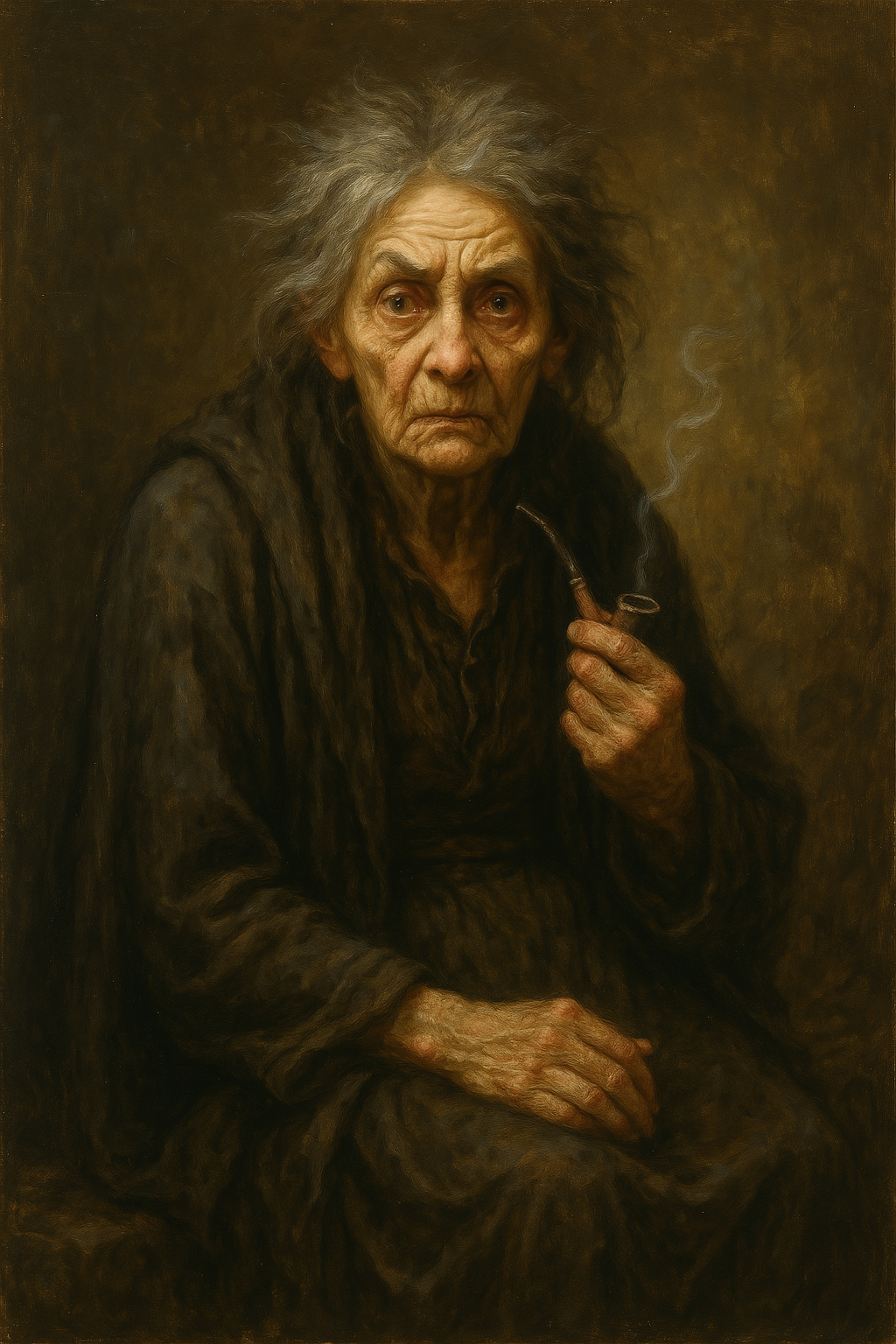
Zim feels uncanny from the first impression, carrying the instability of someone who has lived too long on visions, fear, and borrowed identities.
She moves at the edges of trust, speaking in ways that can sound prophetic, pitiable, or dangerous depending on who is listening. That instability makes her presence hard to categorize and difficult to forget.
In a story where deception often arrives wrapped in conviction, Zim adds a different kind of unease. She suggests how easily frailty, performance, and manipulation can become entangled. She leaves behind the uneasy sense that brokenness and cunning can sometimes borrow each other’s voice. She keeps alive the suspicion that vision itself can be wounded and misused.